
Aaron Patterson
Ruby core developer and major contributor to Ruby on Rails

CUSEC 2015 was held in Montreal, January 2015 bringing together eager students and industry leaders such as Aaron Patterson, Julie Pagano, Camille Fournier, Sandi Metz, Bruce Schneier, David Wolever, Christopher Stumm, Hicham Ratnani, and so many more.
The voices that took the stage at this CUSEC.
Ruby core developer and major contributor to Ruby on Rails

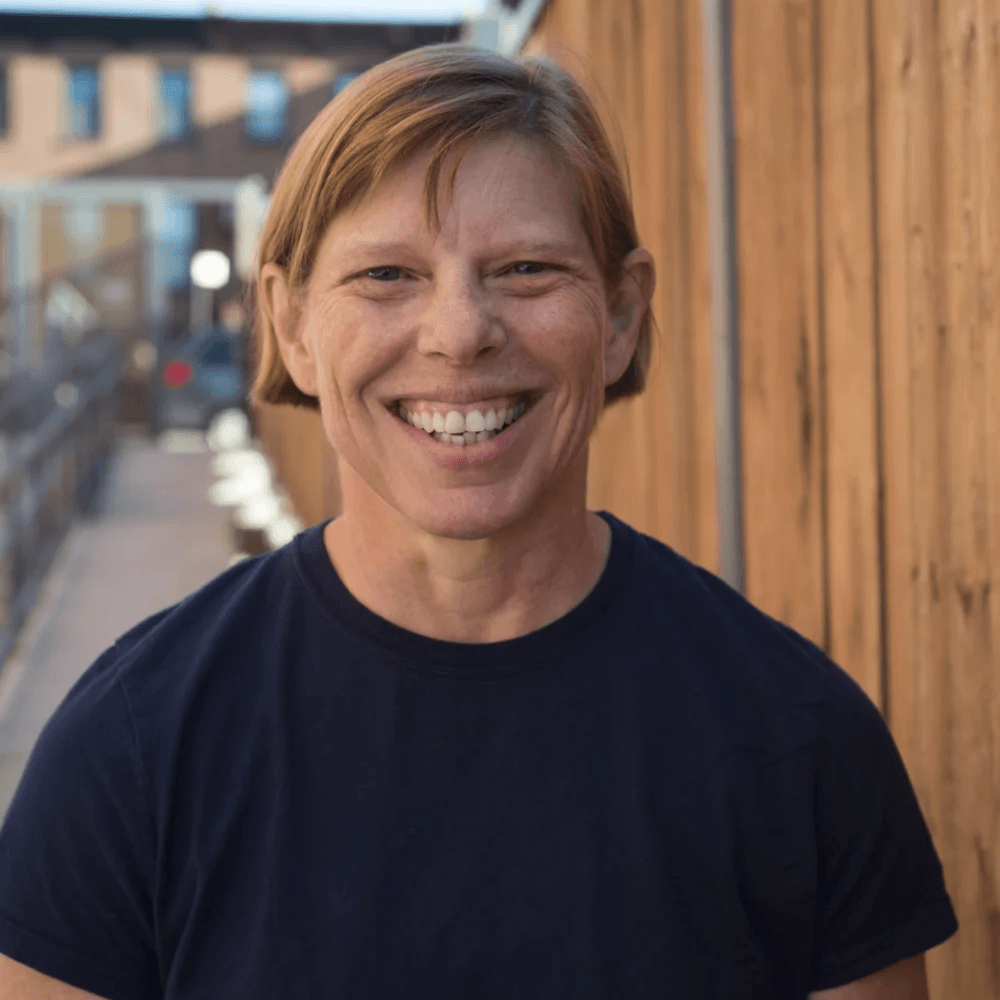
It's Dangerous to Go Alone: Battling the Invisible Monsters in Tech
We talk a lot about the things people can do to get the most out of being a software developer. We talk about testing, design patterns, contributing to open source, and many other topics. All of these things are important, but for some of us there's an important piece of the puzzle being overlooked. It can be hard to focus on your love of coding when you are regularly battling invisible issues like insecurity, anxiety, and lack of confidence. These issues create hurdles that get in the way no matter how much you improve as a software engineer. It is important that we talk about these issues because an unwillingness to admit they're real can make it worse. It makes them feel like the adult version of the monsters under the bed. It's scary and isolating because those around you don't understand or actively deny what you're going through. It's dangerous to go alone! Let's start talking about these issues, so people have the tools and support to fight back. You may have experienced these issues first-hand and need some help. You may want to learn more, so you can help others. This talk is for all of you. I'll identify invisible issues programmers struggle with, talk about their impact, discuss personal experiences dealing with them, and share some tools I found useful in fighting back.

How to Stay in Love with Programming, a personal history
Camille Fournier is the CTO of Rent the Runway, where she and her team of 55 (and growing!) engineers are helping to build the world's first rental platform for luxury goods. Prior to Rent the Runway she was a Vice President at Goldman Sachs, specializing in infrastructure systems. In her limited spare time she contributes to the Apache ZooKeeper project as a committer and PMC member, and helps to oversee the Dropwizard web framework.
MADAM SANDI TELLS YOUR FUTURE
Life's demands are such that it's easy to get lost in the day-to-day, trapped inside your own private world, expecting today to repeat endlessly and the future to remain a distant, untroubling land. The future is coming, however, whether you are ready or not, and when it does everything will change. This talk is a history lesson that covers 3,000 years of technology. It uses the past to lend perspective to the present and give guidance for the future. It reminds us where we come from and suggests how technology can help us to choose where we'll go next.

Challenges in Augmented Reality
Recent advances in technology have lowered many barriers to creating Augmented Reality (AR) experiences. However, the field of AR is still plagued with problems which must be overcome before gaining mainstream acceptance. This talk will provide a brief overview of AR and show current examples of its application across different domains. It will conclude with a look (or better yet, wild speculation) of what AR might look like in the future and the potential concerns surrounding its use.
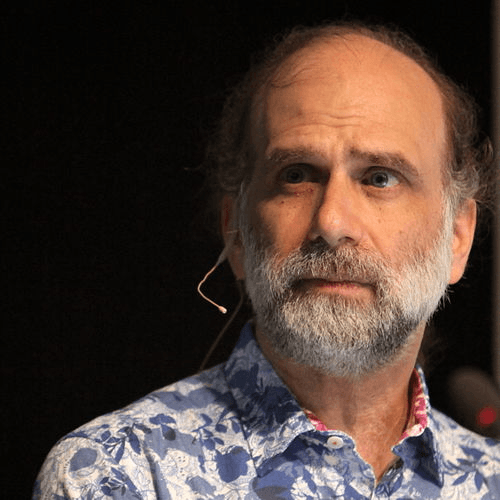
Cyberwar and the Future of Cyber Conflict
Whether it's political rhetoric from the world's major powers, or actual attack and defense capabilities from those countries' militaries, the world is gearing up for cyberwar. But we don't really have good definitions of what cyberwar actually is. Is it war with a cyberspace component, or any political cyber-conflict? There's a lot of money and power in the new cyberwar arms race, and it's important to understand the players and the motivations. We need to stop pandering to cyberwar fears, and better understand cyberwar policy. This affects more than militaries -- it affects us as individuals and as businesses as well.

University: the Important Parts (from a CS dropout)
Hindsight is 20/20, and since leaving university I've had fix years, three startups, and two national conferences to reflect on the most valuable things I have (and haven't) taken away from my time in school.

Etsy runs dozens of experiments at any given time, all while simultaneously deploying code changes 50 times a day. I'll discuss how we coordinate deployment, prioritize experiments and validate product changes through experimentation. Using past experiments, I will demonstrate how Etsy maximizes opportunities for its more than 1 million sellers.

Elida helps create transformative consumer experiences at leading creative agency Sid Lee in Montreal. Her background is diverse, spanning fifteen years working in applied arts such as UX, design, commercial photography, digital media and fine arts. Elida loves to share her geeky knowledge by teaching design and web technology courses at local colleges and events such as WordCamps, Ladies Learning Code and Montreal Girl Geeks.

Entrepreneurship – Why, How & When
As a serial student entrepreneur himself, Helge Seetzen will discuss the role of start-ups in today's economy, challenges for technology ventures in Canada, and opportunities for entrepreneurial students to contribute to this process.


Cordova is a platform for building web-powered mobile apps. It's an awesome platform but has frequently been plagued by claims of bad performance and bad usability. Not to worry, this talk will show you how to create high performance Cordova applications that look and feel like native applications right from the start. Let's put an end to maintaining three different app codebases and let's build on open-source, web standards!

Profiling In Games
CPUs are not getting faster as quickly as they used to. We must rely more on software optimization for performance gains. Everyone agrees that it's important to measure performance before optimizing, but the truth is that sometimes, the act of measuring can be as challenging as the optimization itself -- especially with the advent of multicore CPUs. This talk will present a survey of profiling tools and techniques in the game industry, and explore the usefulness and limitations of each one.

How to Write Reusable Code
Twenty-odd years ago, industry windbags proclaimed that the golden age of reusable software components was around the corner, thanks to the miracle cure of object-oriented programming languages. This kind of magical thinking led, in a long roundabout way, to atrocities like AbstractSingletonProxyBeanFactory (don't ask: it's a Java thing). But reusable code is not an impossible objective, just a difficult one. After a couple of decades of trying, often successfully, to write good reusable code, I've learned a few useful tricks. If you've ever wondered whether you should write a class or a function, or when side effects are appropriate, or how much testing is enough, this is the talk for you.

The Anatomy of a High-Velocity Software Company
Growing a website to support hundreds of millions of users is no easy feat; allowing hundreds of developers to ship thousands of changes to that website is even tougher. In this talk I'll reveal some of the secret sauce that allows Yelp to scale its technology as fast as it scales its developers while enabling rapid iteration and deployment, high-quality, automated QA, and the independence to choose any technology under the sun.

What Business School Taught Me About Being a Developer
There are many different paths you can take become a developer. Mine happened to involve a detour into business school and a brief stint as an auditor. The tech industry is filled with people who have had no formal training in computer science and who have taught themselves, and your learning experience can be very different when you don't have a curriculum to follow. As it turns out, the four long years I spent in business school have come in very handy - precisely because it offers such a different perspective into the reality of the working world. Mapping out your own learning curve, managing your time, communicating with clients and account managers, and finding mentor relationships - here are all the things I didn't realize I learned in business school, and how they make me a better developer.

Cat-DNS: a DNS server that resolves everything to cats.
The internet needs more cats. DNS servers are the authority on all things internet. Therefore, the best DNS server is the one that resolves everything to cats. This talk is about that. Do you think DNS is scary/arcane/confusing? Nope! I'll show you how you can write your own DNS server in less than 200 lines of JavaScript. With cats. We're going to walk through the basics and find out how DNS servers work, how you can talk to a DNS server if you're a browser, and how to talk back to a browser if you are a DNS server. By the end, you'll know how to what a static IP is, what tools you need if you want to mess around with the internet, how you can write your own DNS server and perhaps most importantly, why you probably shouldn't. And have I mentioned the cats? There will definitely be cats.

Frank & Oak Co-founder, COO
Hicham Ratnani is a serial entrepreneur with a passion for consumer products and building companies from the bottom up. As the co-founder and COO of menswear e-tailer Frank & Oak, Hicham leads the brand's operations, logistics, technology, and member services teams. He prides himself on being a 'numbers guy' who uses data intelligence to improve the customer experience, but is also a team leader and motivator, creating company culture behind the scenes. Hicham made his first dollar—online, no less—at the age of 13, and instantly became determined to start his own business. A high school (and later collegiate) football player, he brought his quick instincts and team leadership skills off the field to launch his first registered company while still in high school. After graduating from McGill with a Bachelor's Degree in Electrical Engineering, Hicham became a technology strategist at Deloitte. He later left his corporate life to co-found Frank & Oak, living by his father's mantra that "it's better to make a cent on your own than a dollar from a check." In just a short thirty months, he's successfully transformed the online brand and retailer into a menswear destination for the digital generation.
The students who brought this conference to life.
Samira El-Rayyes
Co-Chair
Santiago Gil
Co-Chair
Patrick Nguyen
Director of Logistics
Kimberly Noel
Logistics Team
Alexander Coco
Director of Sponsorship
Xenia Tay
Sponsorship Team
Aiman Khan
Director of A/V
Dominic Charley-Roy
Director of Speakers
David Kua
Speakers Team
Kat Drobnjakovic
Webmaster
Zichen Jiang
AV Team
Miguel Ocampo-Gooding
Design Team
Rohan Likhite
Design Team
Stephanie Zeidan
Promotion Team
Tahia Khan
Head Delegate - University of Toronto
Farwa Naqi
Head Delegate - University of Waterloo
James Pang
Head Delegate - Queen's University
Julian Horvat
Head Delegate - University of Guelph
Keiko Climaco
Head Delegate - University of Ottawa
Maude Lemarie
Head Delegate - McGill University
Peter Hoang
Head Delegate - McMaster University
TingLi Lucia Lorigiano
Head Delegate - Concordia University
Ursula Sarracini
Head Delegate - York University
The partners who made this CUSEC possible.












Proceedings, photos, and more from this CUSEC.